
Get Expert Guidance
What Our Plans Cover
-
Third-party death
-
Own damage from accident
-
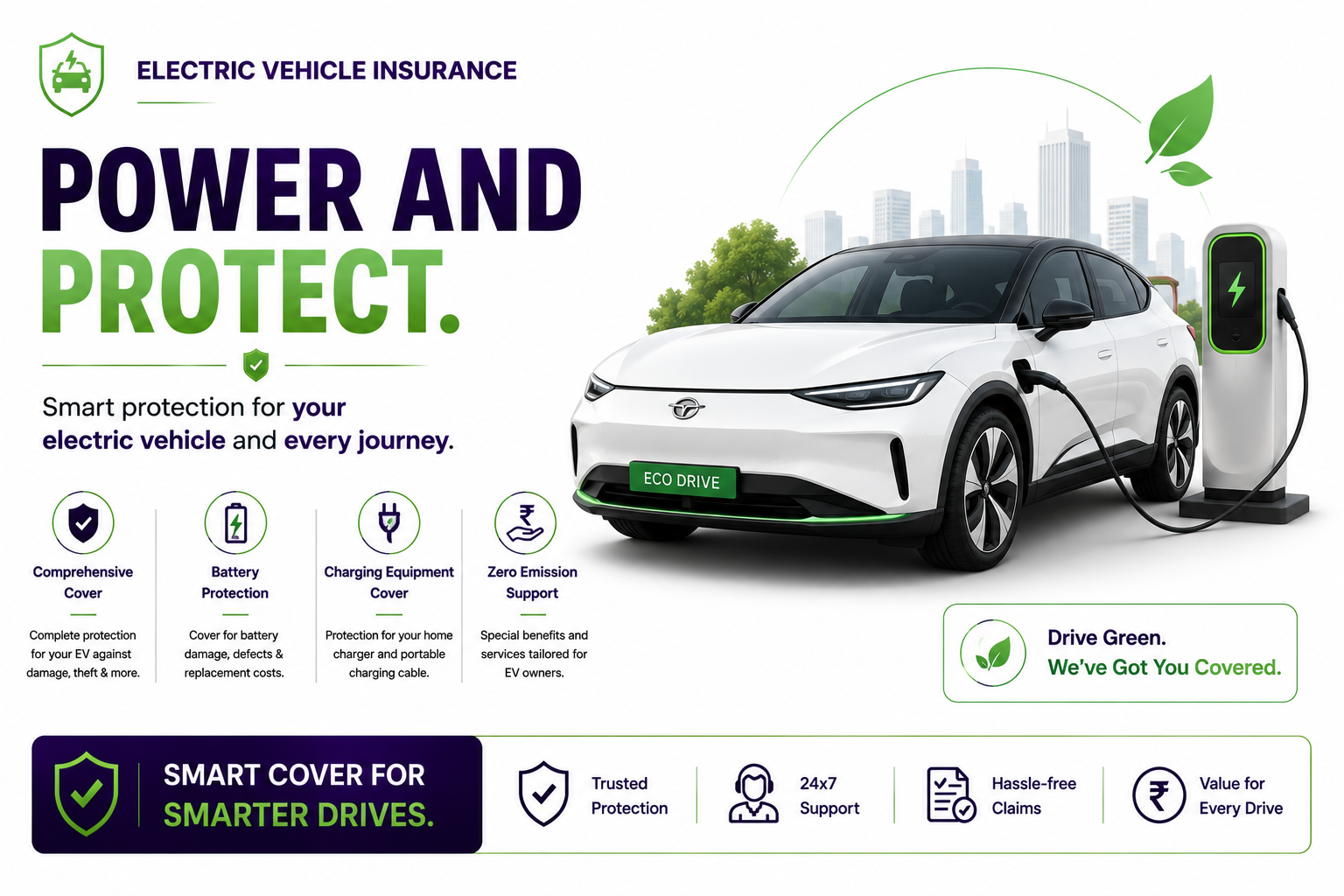
The battery pack
-
Electric motor and power electroni...
-
Charging cable and portable charge...
-
Natural calamities and man-made pe...
-
Home charging equipment
Who Can Consider This Plan?
- Vehicle registered in India with a valid registration certificate
- Valid driving licence for the class of vehicle
- Vehicle fit for use — a failed fitness certificate affects commercial cover
- Accurate declaration of use: private, commercial, or hired out
- Previous insurance details, where no-claim bonus is being carried forward
What May Not Be Covered?
- Battery damage from water ingress, unless the specific add-on is in force
- Gradual battery capacity degradation — a warranty matter, never an insurance one
- Damage from charging on non-compliant or unapproved equipment
- Depreciation on replaced parts without zero depreciation cover
- Software faults and over-the-air update failures
Always check the policy wording before you commit.
Why Choose Wealth & Covers?
- Expert advice to choose the right plan
- Plans from leading insurance companies
- Hassle-free process and documentation
- End-to-end support, including claim assistance
- Dedicated relationship manager
Our Insurance Partners
- Star Health Insurance
- Care Health Insurance
- Niva Bupa Health Insurance
- HDFC ERGO
- ICICI Lombard
- Bajaj Allianz
We represent multiple providers to help you find the most suitable option at the best price.
- Expert Guidance Personalised advice from experienced insurance professionals.
- End-to-End Support From choosing the right plan to claim assistance, we are with you always.
- Claims Assistance Hassle-free claim support to ensure you get what you deserve.
- Transparent Process Clear information, easy documentation and a hassle-free experience.
Overview
An electric vehicle is insured on the same statutory framework as any other car, but its economics are different in one decisive respect: the battery pack commonly represents a third to a half of the vehicle's value, and it is the component most exposed to water damage and least protected by a standard motor policy.
Standard exclusions were written for combustion vehicles. Water ingress damage, which is excluded by default, is precisely the failure mode that matters most on a high-voltage pack. Charging equipment installed at home is not part of the vehicle. Roadside assistance for a discharged battery is a different service from a fuel delivery.
The market has begun to answer these with specific add-ons. Whether a given policy includes them is the difference between an EV that is genuinely insured and one that is insured as though it had a petrol engine.
Who should consider it
Every EV owner, and particularly anyone in a city that floods or who parks in a basement. The battery-related add-ons are inexpensive relative to what they cover and are the main reason to read an EV quote carefully.
It matters most in the first five years, while the pack still carries most of the vehicle's value.
Benefits
- Battery protection cover for the single most expensive component
- Charger and charging cable cover, including equipment installed at home
- Roadside assistance appropriate to a discharged battery rather than an empty tank
- Zero depreciation, which matters more where electronics dominate the repair bill
- Lower third-party premium under the concession available to electric vehicles
- Cover for the motor and control electronics that a combustion policy never contemplated
What is covered, and what is not
Read the right-hand column first. It is the one that decides whether a claim is paid.
Typically covered
- Third-party death, injury and property damage
- Own damage from accident, fire and theft
- The battery pack, subject to the policy terms and any add-on taken
- Electric motor and power electronics
- Charging cable and portable charger, where covered
- Natural calamities and man-made perils
- Home charging equipment, where the add-on is taken
Typically not covered
- Battery damage from water ingress, unless the specific add-on is in force
- Gradual battery capacity degradation — a warranty matter, never an insurance one
- Damage from charging on non-compliant or unapproved equipment
- Depreciation on replaced parts without zero depreciation cover
- Software faults and over-the-air update failures
- Use for commercial ride-hailing on a private policy
- Wear, tear and mechanical breakdown
Inclusions and exclusions vary between providers and between plans from the same provider. The wording in your own policy document is what governs — we will walk you through it before you buy.
How it works with us
- 1 Send us the vehicle details Registration number, make and variant, year, and your current policy if you have one. Thirty seconds of typing.
- 2 We check what you are actually insured for IDV, add-ons, voluntary excess and no-claim bonus. Most renewals we see carry an IDV set years ago and never revisited.
- 3 Two or three quotes, compared on cover and not on price With the garage network in your city and each insurer's claim record put next to the premium.
- 4 Inspection where the law requires it A break in cover or a mid-term insurer change means an inspection. We arrange it, usually by video.
- 5 Policy issued, and we handle the claim when it comes You call us at the garage, not a helpline. We deal with the surveyor and the settlement.
Important considerations
The things a brochure tends to leave out. Read these before you decide.
- Battery protection against water ingress is the most important add-on on an EV policy. Without it, the most expensive component is exposed to the most likely serious peril.
- Capacity degradation is never an insurance matter. Read the manufacturer warranty for the guaranteed retention percentage and its term — that is where that risk sits.
- Confirm whether home charging equipment is covered by the motor policy, the home policy, or neither. It falls between the two more often than not.
- Check that roadside assistance covers a discharged battery with a tow to a charger. Assistance written for combustion vehicles frequently does not.
- Basement parking concentrates flood risk on the component least able to survive it. If you park below ground, treat battery cover as essential rather than optional.
Documents required
- Registration certificate (RC) of the vehicle
- Previous policy copy, for no-claim bonus and continuity
- Driving licence of the owner or the usual driver
- Identity and address proof
- PAN card, where the premium crosses the reporting threshold
- Invoice or delivery note, for a new vehicle
- Vehicle inspection report, where there has been a break in cover
Frequently Asked Questions
Is the battery covered by a standard policy?
It is part of the vehicle for accident damage, but the standard water ingress exclusion applies to it as it does to a combustion engine — and on an EV that exclusion sits over the single most expensive component. A specific battery protection add-on is what closes it.
Does insurance cover the battery losing range over time?
No. Gradual capacity degradation is expected wear and is addressed by the manufacturer warranty, which typically guarantees a retention percentage over a stated period. Insurance responds to sudden damage, not to ageing.
Is EV insurance cheaper than for a petrol car?
The third-party portion carries a concession for electric vehicles. The own-damage portion is often higher, because the vehicle costs more and specialist repair is dearer. Net of both, quotes vary by model more than by fuel type.
Is my home charging point insured?
Not automatically by either policy. Some motor insurers extend to it as an add-on, some home insurers cover it as a fixture, and plenty of owners discover it is covered by neither. Ask the question explicitly.
What if I charge on a third-party or unapproved charger?
Damage traced to non-compliant charging equipment is commonly excluded. Use approved chargers and keep the installation certificate for your home unit — it is the document that settles the argument.
Want a shortlist instead of a catalogue?
Tell us the situation and an advisor comes back with two or three options that actually fit — and names what each one gives up.