


Wealth & Covers
Search products, guides, calculators
+919990003062

Alternate Investment Fund (AIF)

Know your alternative edge

  • Goal-based Planning
  • Diversified Options
  • Regular Reviews
  • End-to-End Support
Alternate Investment Fund (AIF)

Where would you like to invest?

Choose the right investment

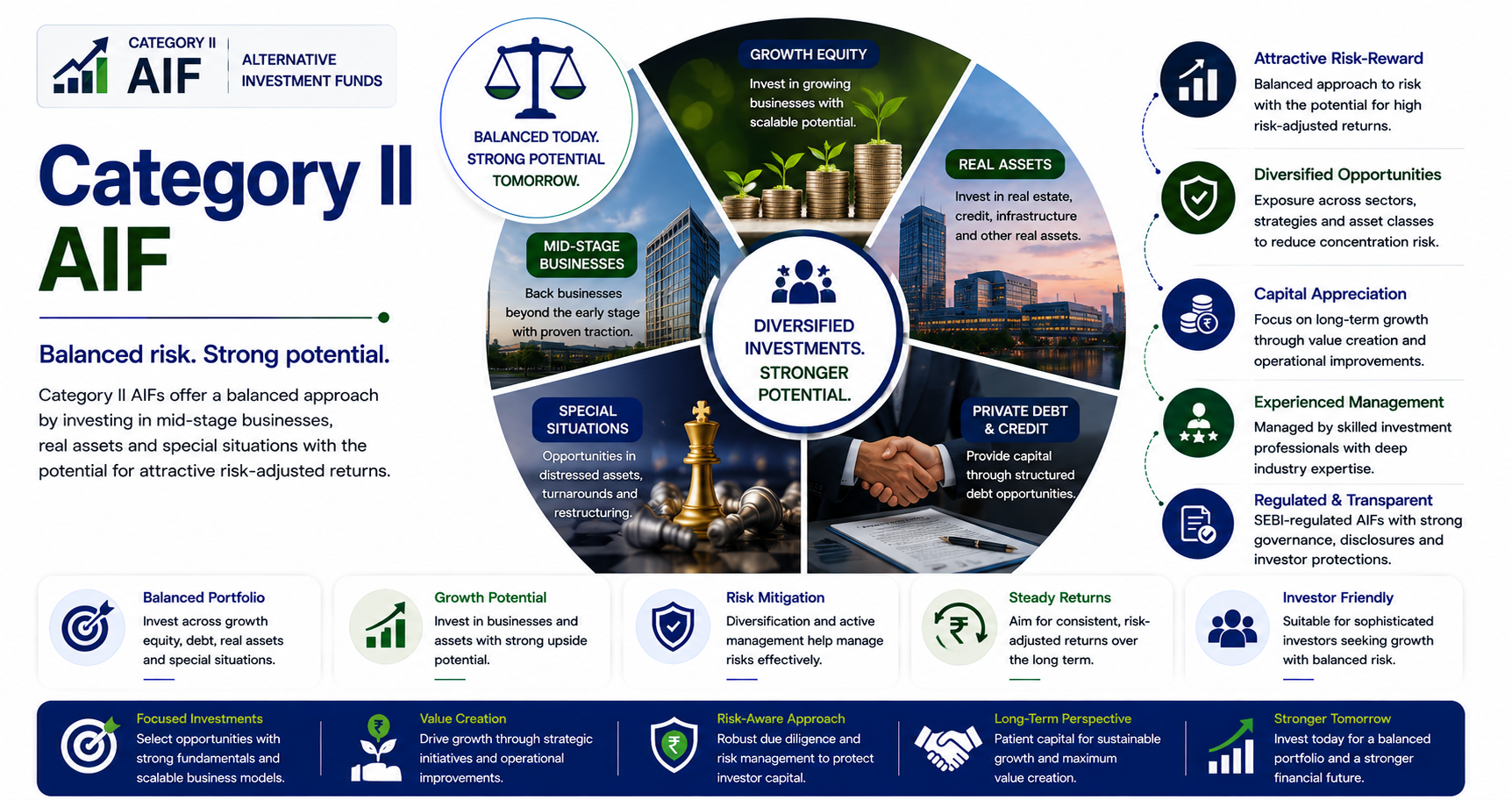
Category II AIF

Most Popular

The broadest AIF category — private equity, private credit and real estate funds without leverage.

  • Access to private equity, private credit and real estate strategies
  • Yields above listed debt on credit strategies
  • Security over assets or cash flows on secured credit funds

View Details

Category I AIF

Funds investing in start-ups, SMEs, infrastructure and social ventures — the category regulators encourage.

  • Exposure to early-stage and venture investments not otherwise accessible
  • Professional sourcing, diligence and portfolio construction
  • Diversification across many companies within one commitment
View Details

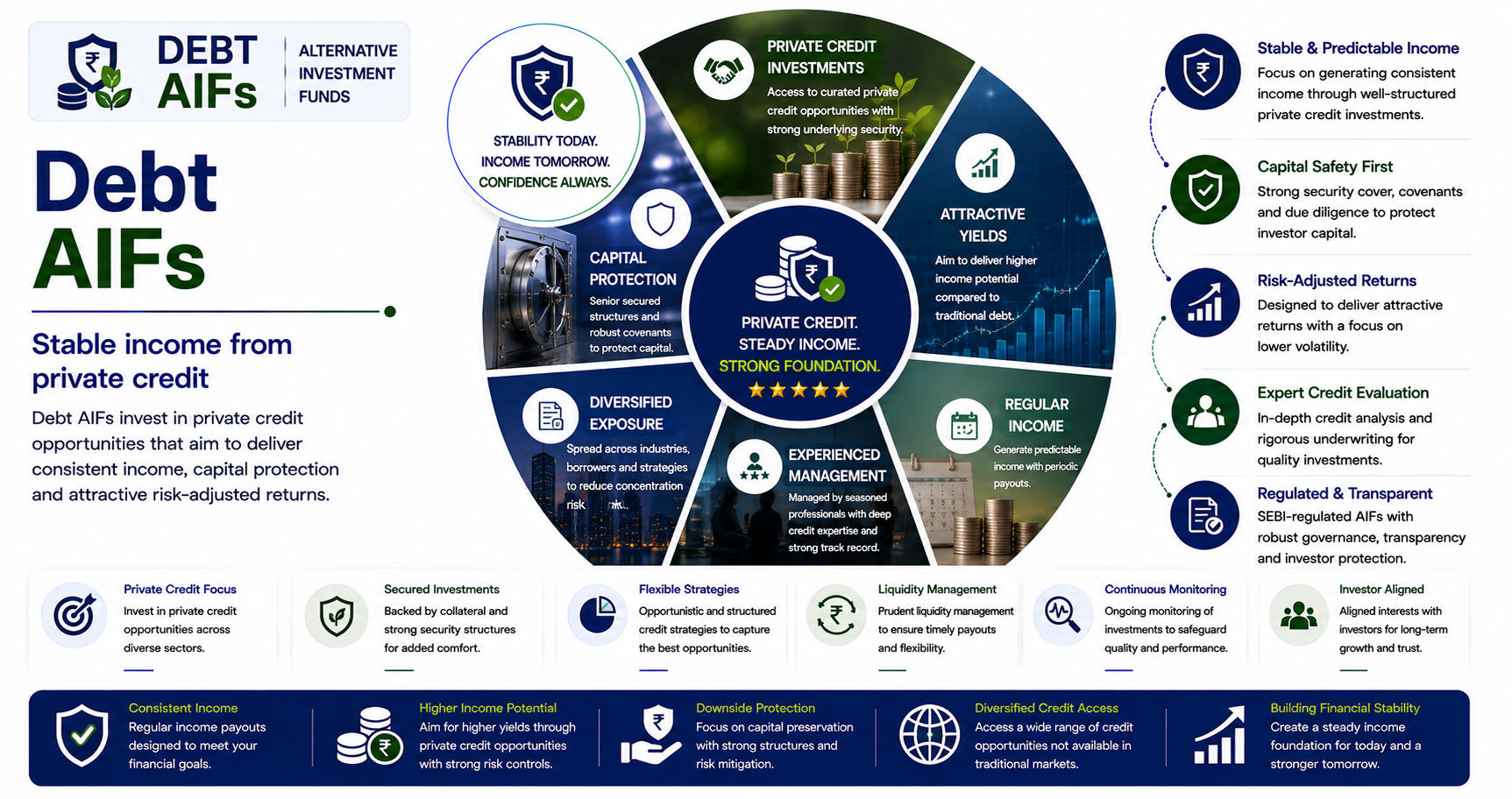
Debt AIFs

Private credit funds lending to companies outside the banking system — high yields, and no exit.

  • Yields materially above listed corporate debt
  • Loans frequently secured against assets or cash flows
  • Covenants and structuring unavailable in listed bonds
View Details

Invest Today. Thrive Tomorrow.

Why Alternate Investment Fund (AIF)?

  • Access to private equity, private credit and real estate strategies
  • Yields above listed debt on credit strategies
  • Security over assets or cash flows on secured credit funds
  • Professional origination and diligence
  • Diversification away from listed market exposure

More than Returns A Partner for Life

What You Get

  • Investment across the fund's portfolio
  • Professional origination, structuring and monitoring
  • Periodic valuation and investor reporting
  • Distributions as investments are realised or interest is collected
  • Participation through a contribution agreement
View complete coverage

Risks to Know

  • Liquidity before the fund's realisation period
  • Any guarantee of return or of capital
  • Leverage beyond operational requirements, by regulation
  • A secondary market for the underlying investments
  • Control over individual investment decisions
View all details

Compare Popular Options

Plan Category II AIF Category I AIF Debt AIFs Hybrid AIFs
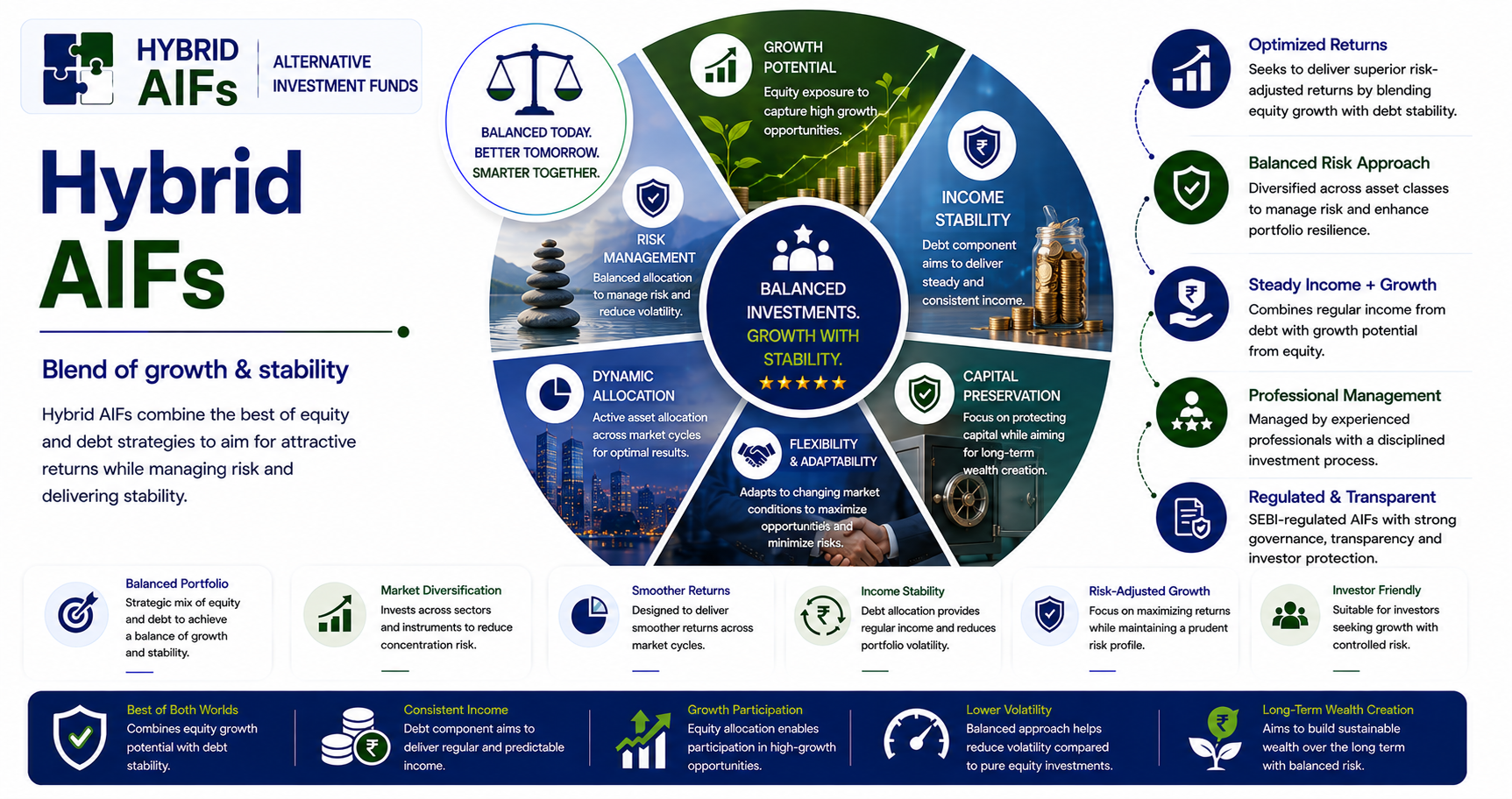
Best for Balanced risk. Strong potential. Invest in startups & infrastructure Stable income from private credit Blend of growth & stability
Minimum from* ₹1,00,00,000 ₹1,00,00,000 ₹1,00,00,000 ₹1,00,00,000
Rating 4.2 4.0 4.1 3.9
Details View View View View

*Indicative starting figures; the final terms depend on your profile.

Compare Plans

Market-linked investments carry market risk. Returns shown are illustrative projections based on the rate you entered — they are neither assured nor guaranteed. Past performance does not indicate future results. Read all scheme-related documents carefully.

Already investing?

Get your portfolio reviewed and make sure it is working for your goals.

  • Check your asset allocation
  • Spot overlapping funds
  • Review costs and returns
  • Get expert recommendations

Get your current investment reviewed

Share it with an advisor — no cost, no obligation

We're Here For The Long Run.

Frequently Asked Questions

View All FAQs
What is private credit and why does it yield more?

Lending to companies that banks will not serve, or on terms banks will not offer, usually secured against assets or cash flows. The yield premium compensates for illiquidity and for borrower credit quality. Understanding why a borrower is not using a bank is the essential piece of diligence.

Can I exit if I change my mind?

Not readily. There is no secondary market for the underlying investments and redemption is generally not available. Capital returns as investments are realised, on the fund's timetable rather than yours.

What happens if a borrower defaults?

A recovery process, which takes years and produces a partial outcome at best. Unlike listed debt there is no price at which to exit a deteriorating credit — you are in it until the recovery concludes.

How do the fees work?

Typically a management fee on committed or invested capital plus a carry on profits above a hurdle rate, sometimes with a catch-up provision. These vary considerably and compound over the fund life, so read them in full rather than accepting a summary.

Is this better than a debt mutual fund?

It targets higher yields and accepts illiquidity, concentration and credit risk that a debt fund does not take. For an investor who can genuinely lock capital away and size the allocation appropriately, it can be a useful diversifier. As a substitute for liquid fixed income, it is not.

Not sure what alternate investment fund (aif) you need?

Tell us about your needs. Our experts will help you find the right investment.

Talk to an Expert

Speak to an advisor

Good decisions begin with clarity.

Tell us where you are today. We’ll help you understand what matters, what may be missing, and what you can do next.

See the full picture
Understand what you already have and where it stands.
Find what's missing
Identify the gaps that could affect your family, wealth or business.
Know what to do next
Get practical guidance built around your priorities — not a product pitch.

No pressure. No obligation. Just a thoughtful conversation.

Let's Connect

Your details are safe & confidential. We'll contact you only regarding your enquiry.