


Wealth & Covers
Search products, guides, calculators
+919990003062

Infrastructure Investment Trusts (InvITs)

Understand how InvITs work

  • Goal-based Planning
  • Diversified Options
  • Regular Reviews
  • End-to-End Support
Infrastructure Investment Trusts (InvITs)

Where would you like to invest?

Choose the right investment

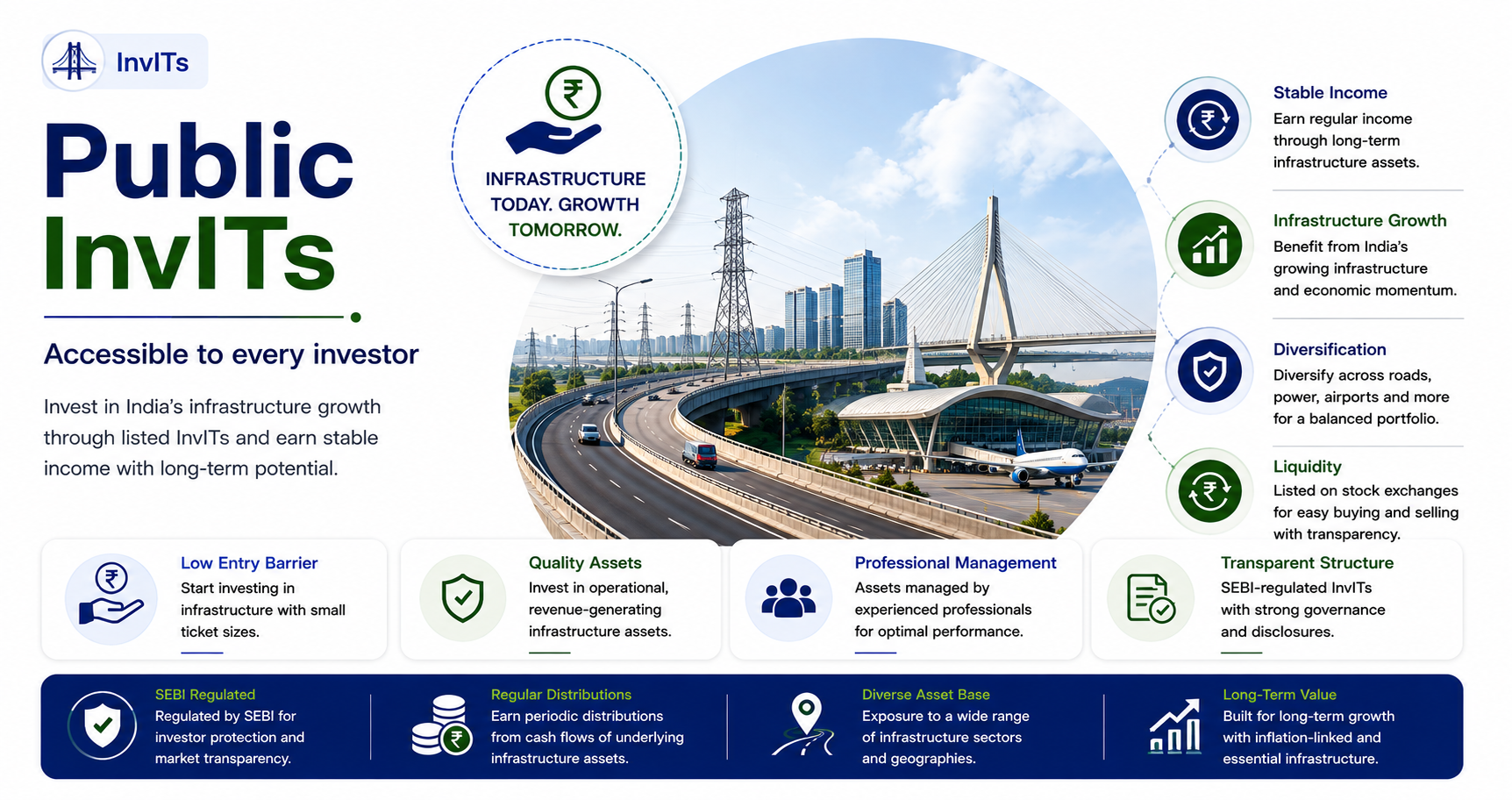
Public InvITs

Most Popular

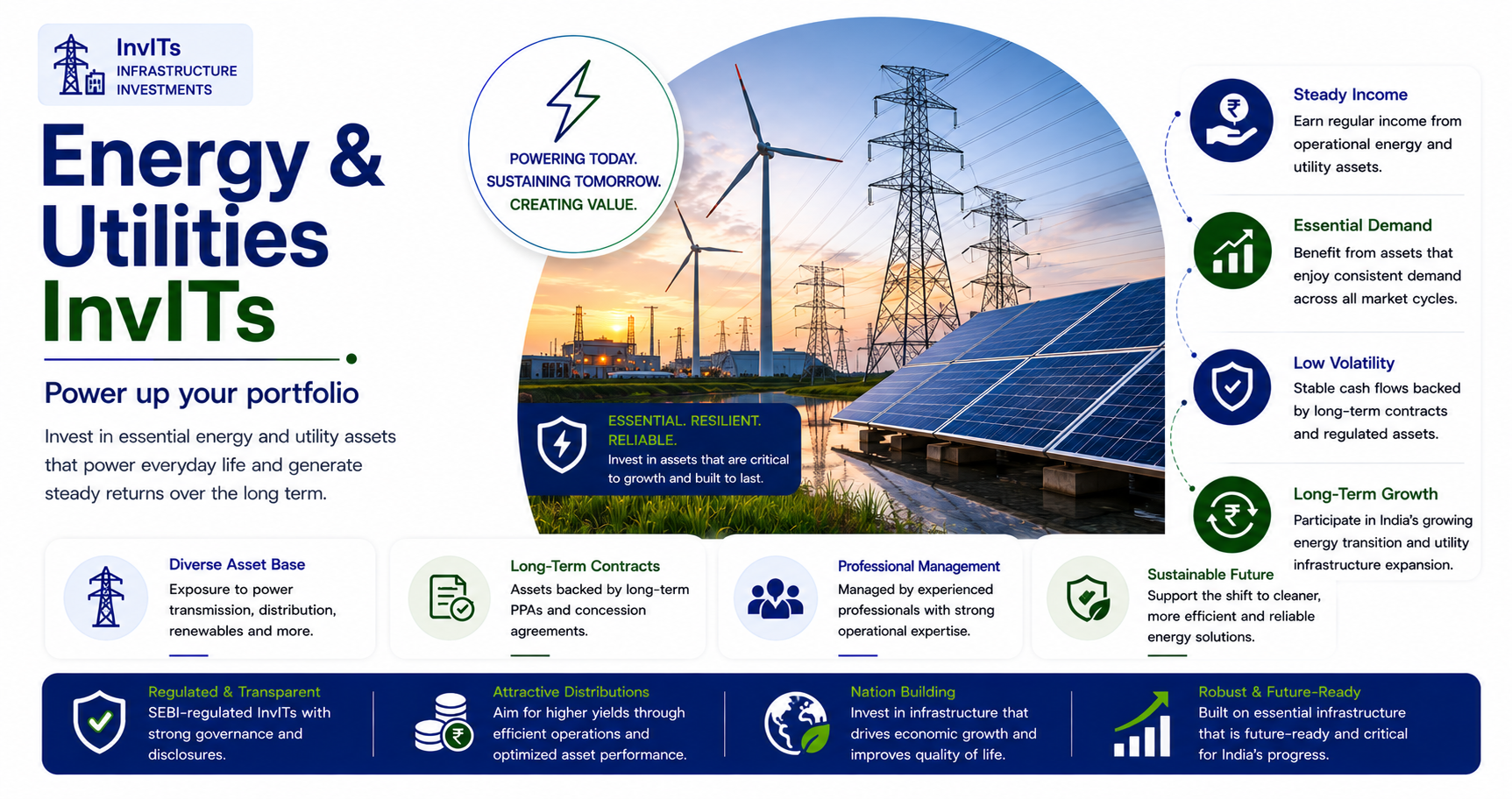
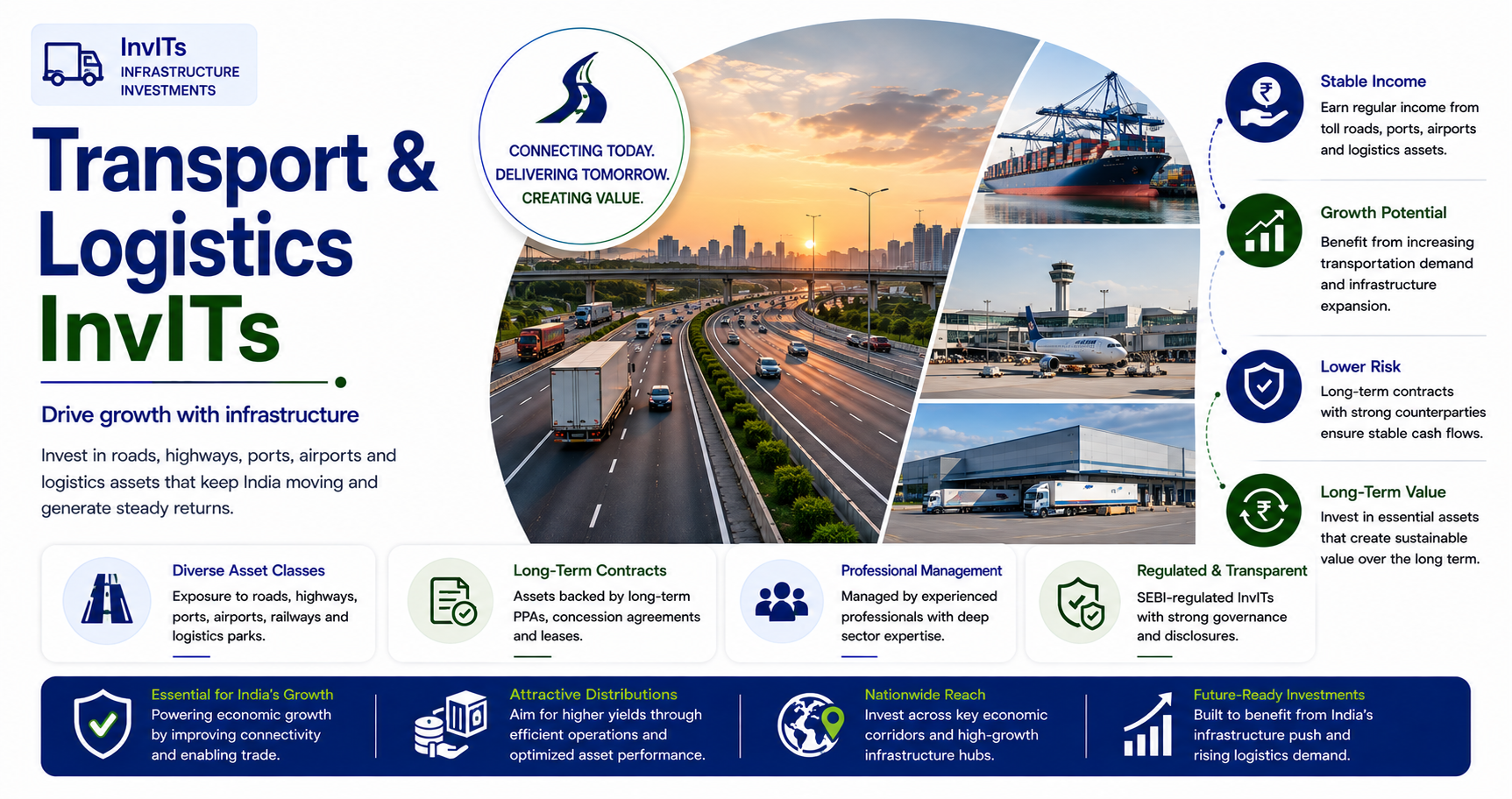
Listed infrastructure trusts — operating roads, power lines and pipelines, distributing the cash they generate.

  • Exposure to operating infrastructure assets at retail ticket sizes
  • Regulated distribution of the majority of distributable cash flows
  • Revenue frequently underpinned by long-term contracts

View Details

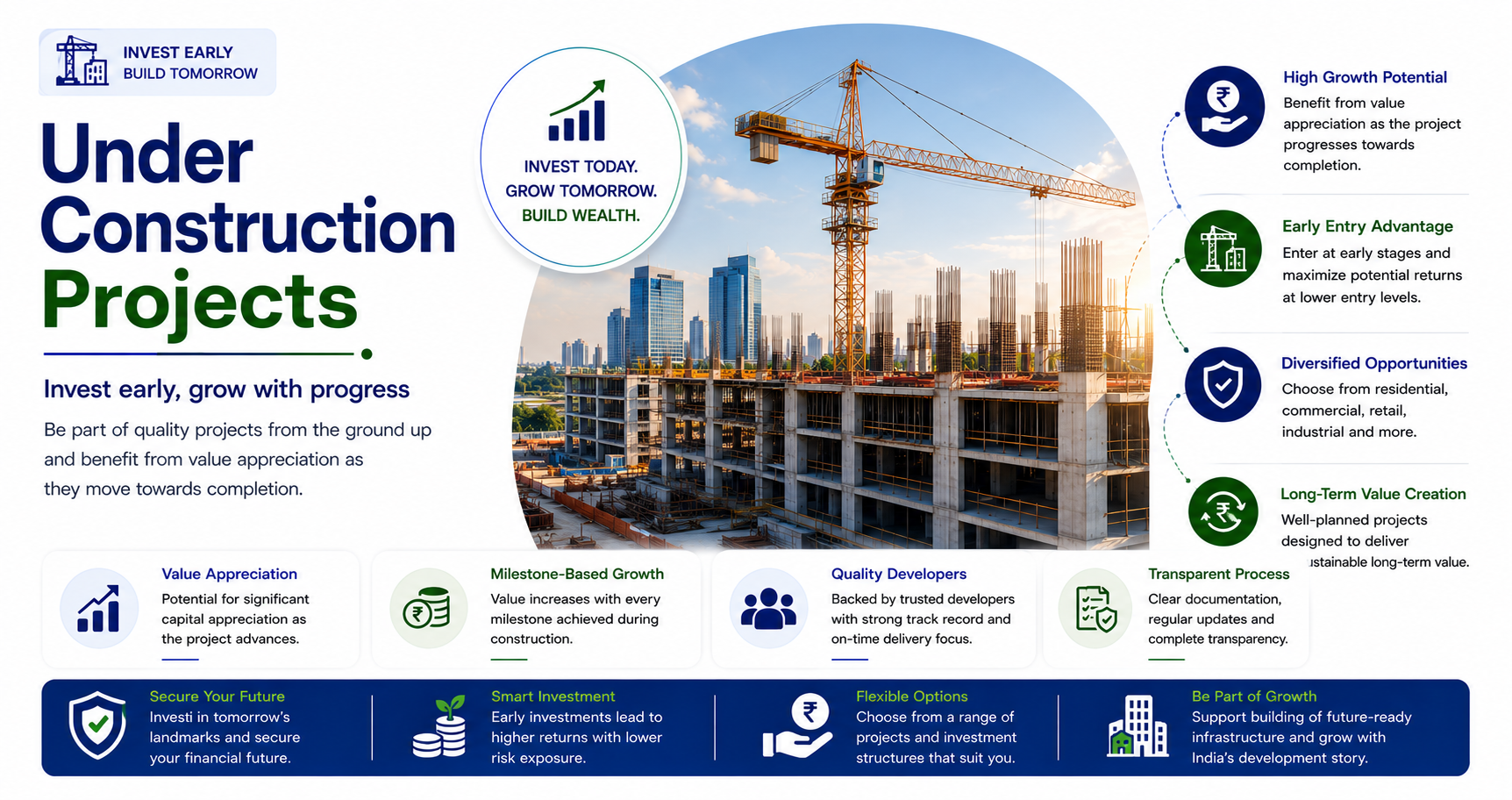
Under Construction Projects

InvITs with a development component — higher potential return, and the risk that stops projects completing.

  • Assets acquired more cheaply than completed ones
  • Potential for higher returns if projects complete as planned
  • Regulatory cap limits the proportion of the portfolio at risk
View Details

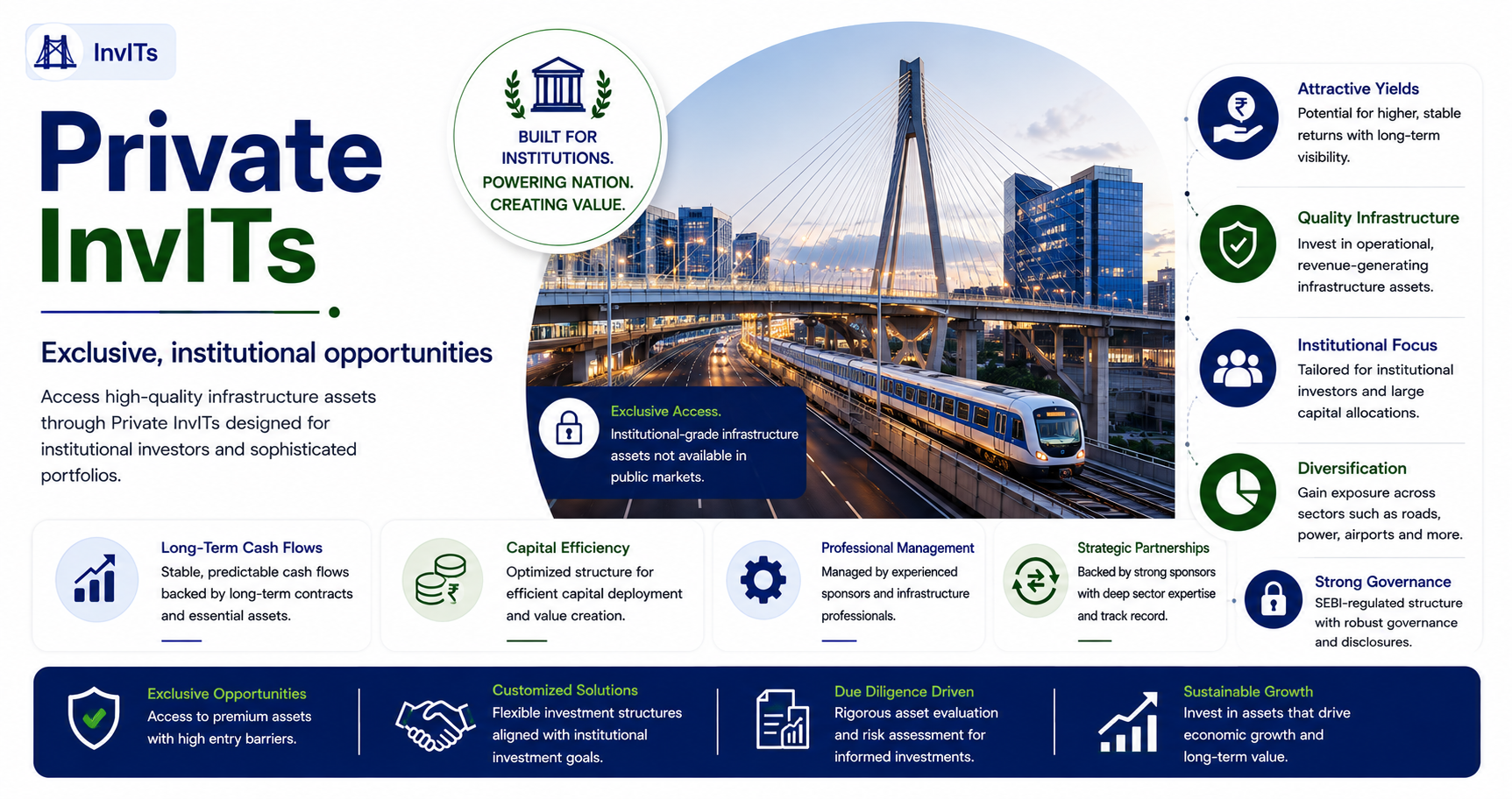
Private InvITs

Unlisted infrastructure trusts — institutional scale, long lock-ins, and no market price.

  • Access to specific infrastructure assets not in listed vehicles
  • No daily price movement to react to
  • Terms negotiated directly in some structures
View Details

Invest Today. Thrive Tomorrow.

Why Infrastructure Investment Trusts (InvITs)?

  • Exposure to operating infrastructure assets at retail ticket sizes
  • Regulated distribution of the majority of distributable cash flows
  • Revenue frequently underpinned by long-term contracts
  • Listed liquidity, unlike direct infrastructure investment
  • Assets already operating, so no construction risk

More than Returns A Partner for Life

What You Get

  • Units in a listed infrastructure investment trust
  • Periodic distributions from operating cash flows
  • Exposure to a portfolio of operating infrastructure assets
  • Quarterly financial and operational disclosure
  • Holding in your demat account
View complete coverage

Risks to Know

  • Any guarantee of distribution amount
  • Protection against unit price movement
  • Perpetual asset life — most concessions have an end date
  • Tax exemption; distribution components are taxed differently
View all details

Compare Popular Options

Plan Public InvITs Under Construction Projects Private InvITs Telecom & Digital Infra InvITs
Best for Accessible to every investor Invest early, grow with progress Exclusive, institutional opportunities Connect with the future
Minimum from* ₹15,000 ₹25,000 ₹1,00,00,000 ₹15,000
Rating 4.3 3.7 3.7 4.2
Details View View View View

*Indicative starting figures; the final terms depend on your profile.

Compare Plans

Market-linked investments carry market risk. Returns shown are illustrative projections based on the rate you entered — they are neither assured nor guaranteed. Past performance does not indicate future results. Read all scheme-related documents carefully.

Already investing?

Get your portfolio reviewed and make sure it is working for your goals.

  • Check your asset allocation
  • Spot overlapping funds
  • Review costs and returns
  • Get expert recommendations

Get your current investment reviewed

Share it with an advisor — no cost, no obligation

We're Here For The Long Run.

Frequently Asked Questions

View All FAQs
Why are InvIT yields so much higher than REITs?

Largely because part of the distribution is your own capital returning. Most infrastructure assets operate under a finite concession, after which they revert to the granting authority, so the trust must return capital over the asset's life. A high InvIT yield and a bond coupon are not comparable numbers.

What happens when a concession expires?

The asset generally reverts to the granting authority and stops generating revenue for the trust. A well-managed InvIT acquires replacement assets to maintain distributions, and how successfully it does that is one of the most important things to assess.

What is the biggest risk?

Counterparty and policy risk. Revenue depends on who pays and under what contract — a state utility, a concession authority, or road users. Regulatory changes to tariffs or concession terms can materially affect cash flows, and this is a sector where policy matters.

How are the distributions taxed?

By component. Interest, dividend and return of capital each have their own treatment, and the trust publishes a breakdown after each distribution. Return of capital is not taxed as income but reduces your cost base, which matters when you eventually sell.

Are distributions guaranteed?

No. Regulations require distribution of the majority of distributable cash flows, but the amount depends on what the assets actually generate. Traffic volumes, availability payments and operating costs all affect it.

Not sure what infrastructure investment trusts (invits) you need?

Tell us about your needs. Our experts will help you find the right investment.

Talk to an Expert

Speak to an advisor

Good decisions begin with clarity.

Tell us where you are today. We’ll help you understand what matters, what may be missing, and what you can do next.

See the full picture
Understand what you already have and where it stands.
Find what's missing
Identify the gaps that could affect your family, wealth or business.
Know what to do next
Get practical guidance built around your priorities — not a product pitch.

No pressure. No obligation. Just a thoughtful conversation.

Let's Connect

Your details are safe & confidential. We'll contact you only regarding your enquiry.