
Plan your investment
What Our Plans Cover
-
A limited proportion of under-cons...
-
Exposure to project completion ups...
-
Disclosure of construction progres...
-
The operating portfolio alongside
Who Can Consider This Plan?
- Indian resident individual, HUF, trust or company
- NRIs, subject to the applicable investment routes
- A demat account and a trading account
- PAN and completed KYC
- Minimum investment as per the exchange lot size
What May Not Be Covered?
- Distributions from assets still under construction
- Any assurance of on-time or on-budget completion
- Protection against cost escalation
- A construction proportion above the regulatory cap
Always check the policy wording before you commit.
Why Choose Wealth & Covers?
- Expert advice to choose the right plan
- Plans from leading investments companies
- Hassle-free process and documentation
- End-to-end support, including claim assistance
- Dedicated relationship manager
- Expert Guidance Personalised advice from experienced investments professionals.
- End-to-End Support From choosing the right plan to claim assistance, we are with you always.
- Claims Assistance Hassle-free claim support to ensure you get what you deserve.
- Transparent Process Clear information, easy documentation and a hassle-free experience.
Overview
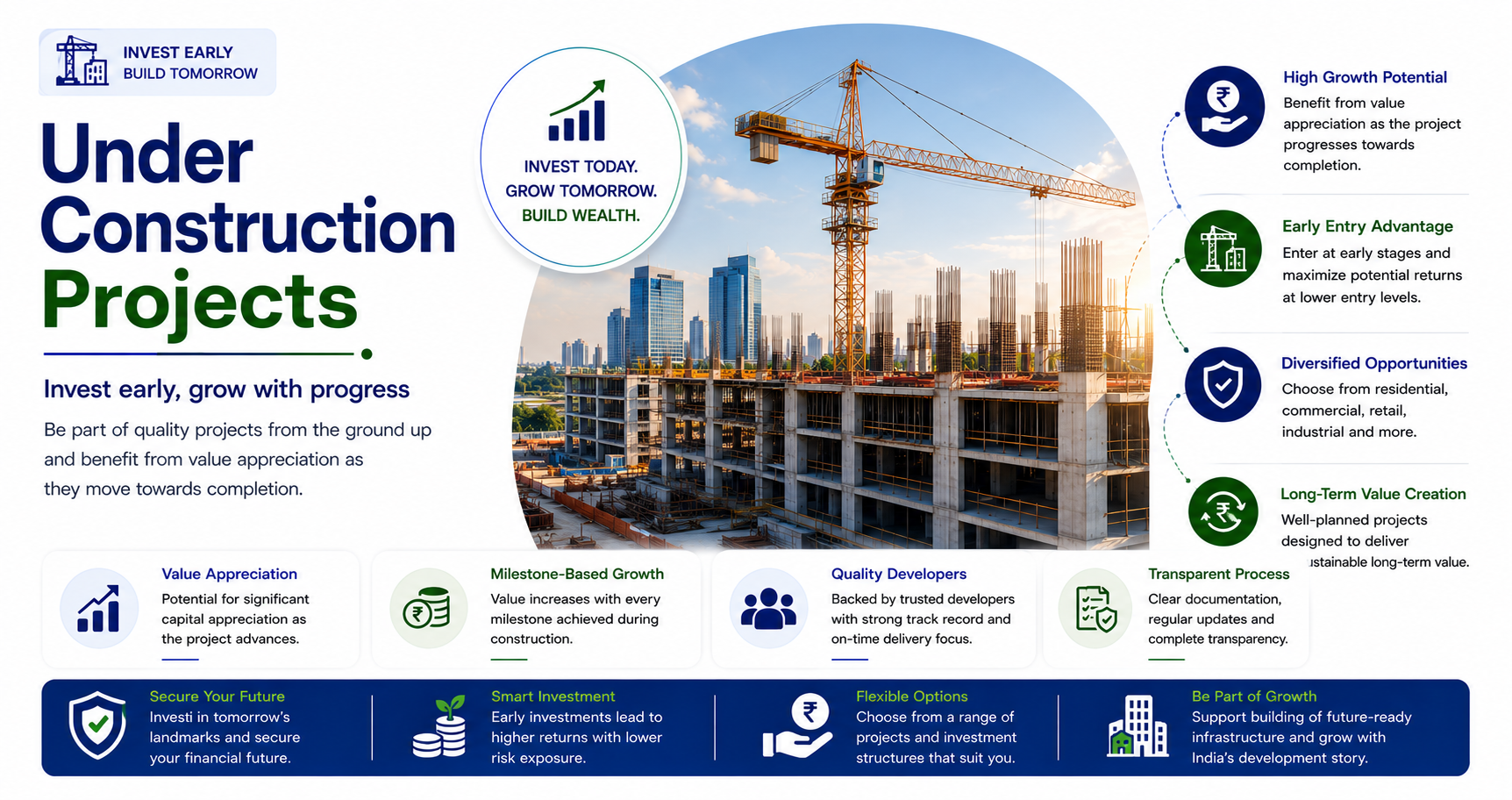
Indian regulation permits an InvIT to hold a limited proportion of assets still under construction, with the great majority required to be revenue-generating. That limit exists because development risk is materially higher than operating risk.
The argument for a development component is return. An asset acquired before completion is bought more cheaply than one already operating, and if it completes on time and on budget the trust captures that difference.
The argument against is that infrastructure projects frequently do not complete on time or on budget. Land acquisition stalls, approvals are delayed, contractors underperform, and costs escalate. During construction the asset generates nothing while consuming capital, which reduces the cash available for distribution.
Who should consider it
Investors comfortable with development risk in exchange for higher potential returns. Investors assessing an InvIT's specific under-construction exposure and the sponsor's execution record.
Income-focused investors who need reliable distributions should prefer InvITs holding only operating assets.
Benefits
- Assets acquired more cheaply than completed ones
- Potential for higher returns if projects complete as planned
- Regulatory cap limits the proportion of the portfolio at risk
- Growth in the asset base without acquiring at operating-asset prices
- Sponsor execution capability can be a genuine advantage
What is included, and what is not
Read the right-hand column first. It is the one that tends to surprise people later.
Included
- A limited proportion of under-construction assets within the trust
- Exposure to project completion upside
- Disclosure of construction progress in periodic reporting
- The operating portfolio alongside, generating current cash flow
Not included
- Distributions from assets still under construction
- Any assurance of on-time or on-budget completion
- Protection against cost escalation
- A construction proportion above the regulatory cap
Terms vary between providers and between plans from the same provider. The offer document you receive is what governs — we will walk you through it before you commit.
How it works with us
- 1 We explain the finite-life point first Most InvIT assets have a concession period. Part of the yield is your own capital returning, and that changes how to read it.
- 2 Distribution quality examined, not just the number How much is genuinely surplus cash and how much is capital return, and what happens to it as the concession runs down.
- 3 Counterparty and concession terms read carefully Who pays the revenue, under what contract, and for how long. That is where the real risk in an InvIT sits.
- 4 Purchase through the exchange Listed InvIT units trade like shares and settle into your demat account.
- 5 Distributions tracked and taxed by component Interest, dividend and return of capital are taxed differently. Reporting them correctly is part of holding these.
Important considerations
The things a brochure tends to leave out. Read these before you decide.
- Assess the sponsor's execution record specifically. Infrastructure delivery capability varies enormously, and it is the single most useful predictor here.
- Understand what proportion of the trust is under construction and what that does to current distributions.
- Land acquisition and approvals are the most common cause of delay in Indian infrastructure. Check what stage each project has reached.
- Cost escalation is borne by the trust. A fixed-price contract with a capable contractor is materially better than an open exposure.
- If reliable income is your objective, an InvIT holding only operating assets is the better structure.
Documents required
- PAN card
- Aadhaar or other identity proof
- Address proof
- Demat account details
- Bank account proof for distribution credit
- Completed KYC with the broker
Frequently Asked Questions
How much of an InvIT can be under construction?
Regulation caps it, requiring the great majority of assets to be revenue-generating. That cap exists precisely because development risk is materially higher, and it is a genuine protection for unitholders.
Do under-construction assets generate any income?
No. They consume capital while producing nothing, which reduces the cash available for distribution during the construction period. That trade-off is the cost of the potential upside on completion.
What usually goes wrong?
Land acquisition and approvals, most often, followed by contractor underperformance and cost escalation. Indian infrastructure delivery has improved but delay remains common, and checking what stage each project has actually reached is worthwhile.
How do I assess the risk?
Principally through the sponsor's execution record. Delivery capability varies enormously between sponsors, and a strong track record of completing projects on time is the most useful single indicator available.
Should an income investor buy these?
Generally not. If reliable distributions are the objective, an InvIT holding only operating assets delivers that with far less to go wrong. The development component is for investors specifically seeking the completion upside and able to absorb the risk.
Want a shortlist instead of a catalogue?
Tell us the situation and an advisor comes back with two or three options that actually fit — and names what each one gives up.